
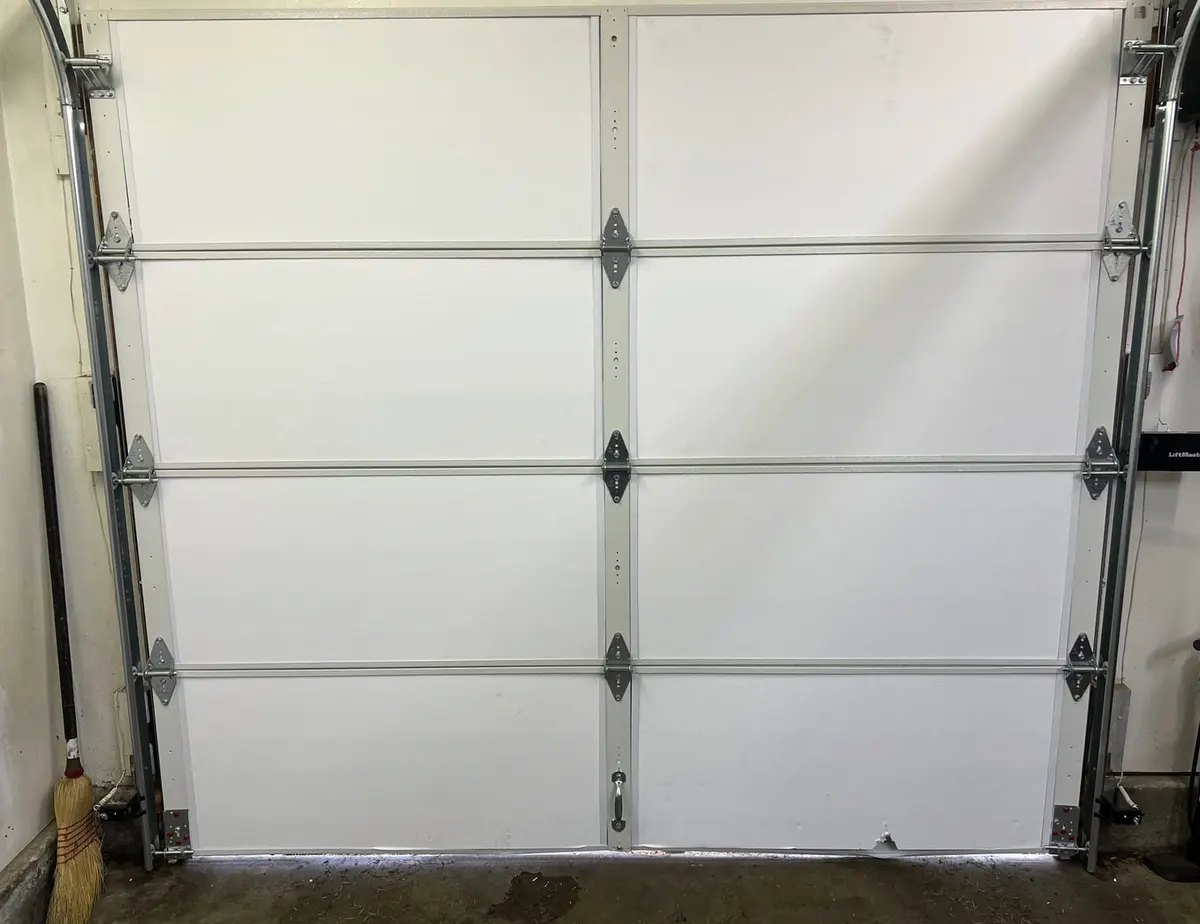
The Mistake: Treating the Garage Like It's Not Part of the House
Here's the argument that starts most of these conversations: one person notices the upstairs bonus room or the room over the garage runs hot in summer and cold in winter, and blames the thermostat, the ductwork, or the HVAC unit itself. It's a tempting conclusion because it's an easy fix on paper — adjust a setting, call an HVAC tech, add a vent. Nobody wants to believe the actual problem is a garage door, because a garage door feels like it belongs to a separate, disconnected space. But in an attached garage, that's not true. The garage shares at least one wall with the living area, and in a lot of homes built in this part of California, the HVAC ducts run straight through the garage ceiling or along a garage wall before branching into the house. A leaky garage door doesn't just let air into the garage — it lets the garage's temperature swing wildly, and that swing bleeds straight into the rooms next to and above it.
How the Leak Actually Travels Into Your Bill
Think of the garage as an uninsulated buffer zone that's supposed to protect the house from outdoor temperature swings. When the door seals well, the garage stays somewhere in between outside and inside temperature — not too hot, not too cold. When the door leaks, the garage basically becomes outside. In the warmer stretches here, especially heading into dry Santa Ana conditions, a garage with gaps at the bottom seal or sides can climb well past the outdoor air temperature by afternoon, because sunlight and heat get trapped with nowhere to vent. That heat radiates through the shared wall and ceiling, and if ductwork runs through that space, the air conditioner is cooling air that's already been heated again before it even reaches the vents. In winter, during the rainy season, the reverse happens — cold, damp air pours in around a warped or gapped seal, chilling the garage and anything routed through it, so the furnace runs longer to make up the difference.
Real Symptoms to Check For
- A specific room near or above the garage that never quite matches the thermostat setting
- Light visible around the bottom, sides, or top of the closed door
- Visible daylight or a cold draft at floor level inside the garage on a closed door
- HVAC cycles that run noticeably longer in rooms adjacent to the garage than elsewhere in the house
- Dust, pollen, or wildfire-season smoke residue collecting just inside the garage near the door edges — a sign air is moving through, not just around
What Actually Fixes It (and What Doesn't)
Weatherstripping and a solid bottom seal matter, but they only work if the door itself closes flush and square. A door that's slightly out of alignment, dragging on one side, or not seating evenly on the track will leak around new weatherstripping just as easily as old. That's the trade-off people miss: buying premium seals without checking the door's balance and track alignment is like putting new weatherstripping on a window that doesn't close all the way — it helps a little, but it doesn't solve the real problem.
Panel insulation is the other half of the equation. An older uninsulated steel or wood door has little resistance to outside temperature, so even a perfectly sealed door will transfer heat through the panel itself. Replacing just the seals on a non-insulated door narrows the gap but doesn't close it. Upgrading to an insulated door panel, where it makes sense for the budget, has a bigger impact on temperature swing than seals alone — but it's a bigger expense, so it's worth deciding whether the symptom (one hot room) justifies a full door replacement or just a repair-and-reseal approach first.
When to Call Garden Grove Garage Door
If you've checked for daylight around the door, confirmed it closes flush, and the room next to the garage still runs hot or cold, it's worth having a technician look at the whole system rather than just the seal. Our Preventive Maintenance service checks door balance, track alignment, and seal condition together, since a leak is often a combination of worn weatherstripping and a door that's drifted out of adjustment over time. If the door itself is sagging, warped, or struggling to close evenly, that points to spring tension or track issues worth addressing through a proper Garage Door Repair visit before new seals are installed.
If you're in Garden Grove, Anaheim, Santa Ana, or anywhere nearby and you're ready to settle the argument for good, call Garden Grove Garage Door and we'll find out exactly where the air — and the money — is getting out.